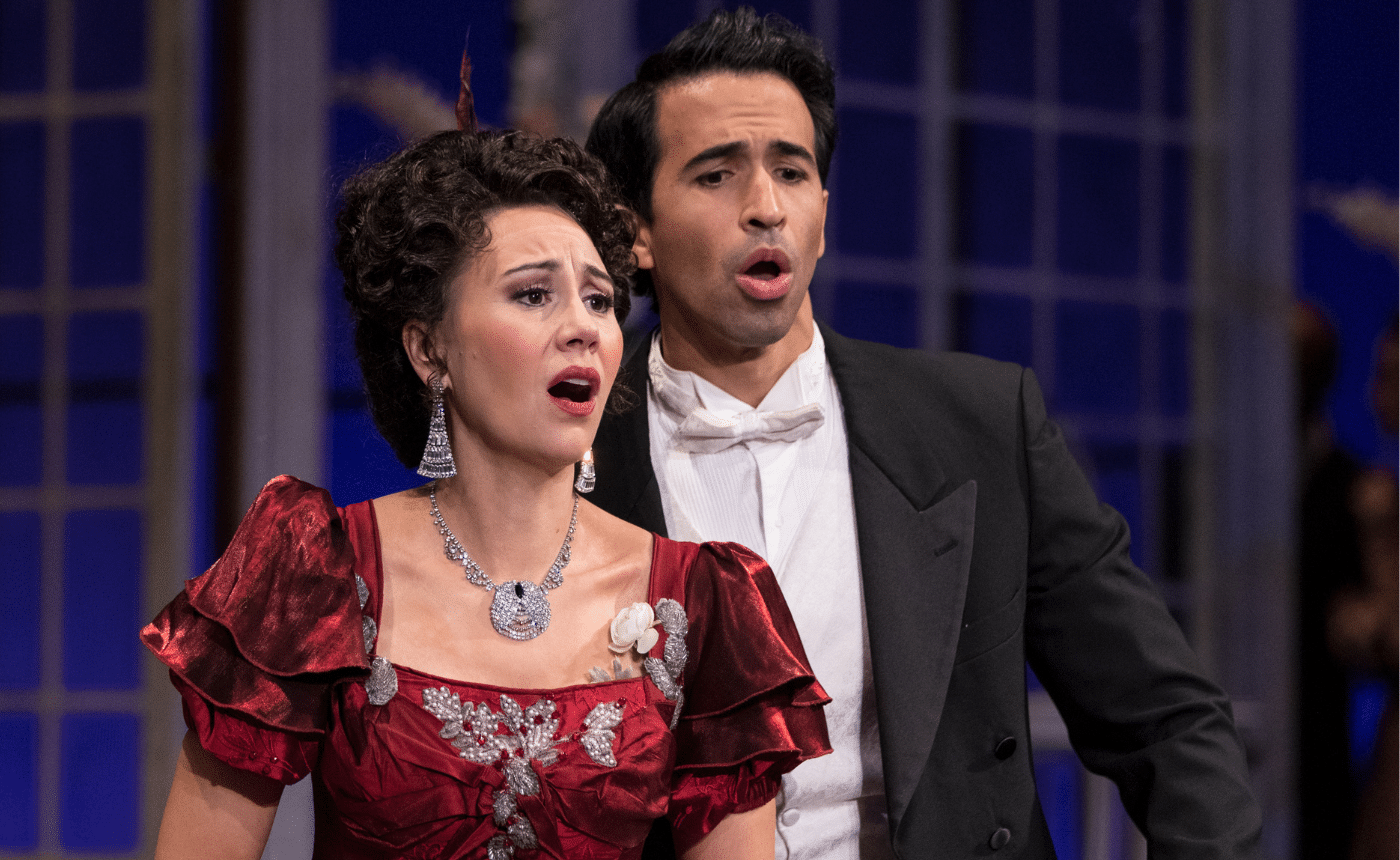
Refreshing Elixir
By Daniel Ellis
When this team of gifted designers and I first imagined our production of The Elixir of Love, we were scattered across the country, collaborating remotely through the long months of the COVID-19 lockdown. Cheri Prough DeVol, Angela Kahler, Jaime Mejia, and I chose this opera for submission to the OPERA America Robert L. B. Tobin Director-Designer Prize—an honor we were grateful to receive in 2021.
In the midst of uncertainty and isolation, this project brought us real joy. It rekindled our passion through shared purpose, camaraderie, and hope. Its light was as irresistible as Dulcamara’s famed elixir, and each weekly Zoom meeting reminded us why we fell in love with this art form. Free from the pressure of immediate production deadlines, we rediscovered our creative process: developing a shared vocabulary, exploring how storytelling infuses every design choice, and allowing time for deeper research to shape each detail—from the texture of a wall to the stitch of a bodice to the flicker of a distant smudge pot.
Whenever I approach a work from the inherited repertoire, my goal is to recontextualize it so that it remains historically, emotionally, and ethically accessible—honoring the spirit of the original while allowing the story to resonate with today’s audiences. Sometimes that means embracing tradition; at other times, shifting the setting or period reveals what has been there all along.
As we examined the world of this Elixir of Love, we found more than a charming love story. It became clear that beneath its charm lies a quiet, enduring warning—about hucksterism, gaslighting, consumerism, and the alluring false promises we are so quick to trust.
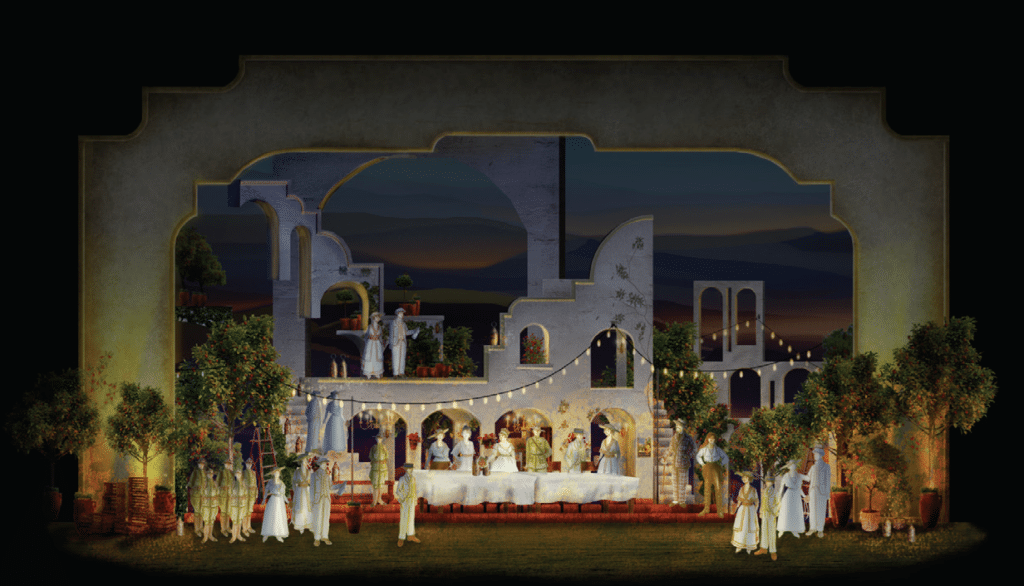
by Jaime Mejia and lighting design concept created by Cheri Prough DeVol.
Our research led us to early 20th century American marketing, particularly Albert Lasker’s 1916 campaign that revived California’s struggling orange industry. His simple idea—pasteurized orange juice promoted with the cheerful call to “Drink an orange!”—reshaped public attitudes almost overnight. This discovery, along with the broader history of California in this era, made 1916 Southern California the ideal setting for our production.
It was a moment of profound transition: immigration from Asia and Latin America was increasing, the Great Migration was underway, women’s suffrage was gaining ground, and the nation was struggling to recruit soldiers for the border conflict with Mexico. It was a time of change, yes, but also of industry, community, and a belief that the country could grow stronger through the contributions of many.
Placing the opera in this landscape allowed us to keep the libretto intact while widening the doorway for today’s artists and audiences. The world of 1916 California reflects the variety and spirit of the American experience, and each singer brings their own authenticity and heritage into the rehearsal room, creating a stage world that is welcoming, familiar, and distinctly ours.
This production honors Donizetti’s charm and musical brilliance while celebrating an American chapter defined by resilience, ingenuity, and hope—as refreshing, in its own way, as a glass of orange juice with breakfast.