Finding Motion in Music
By Julia Lyon
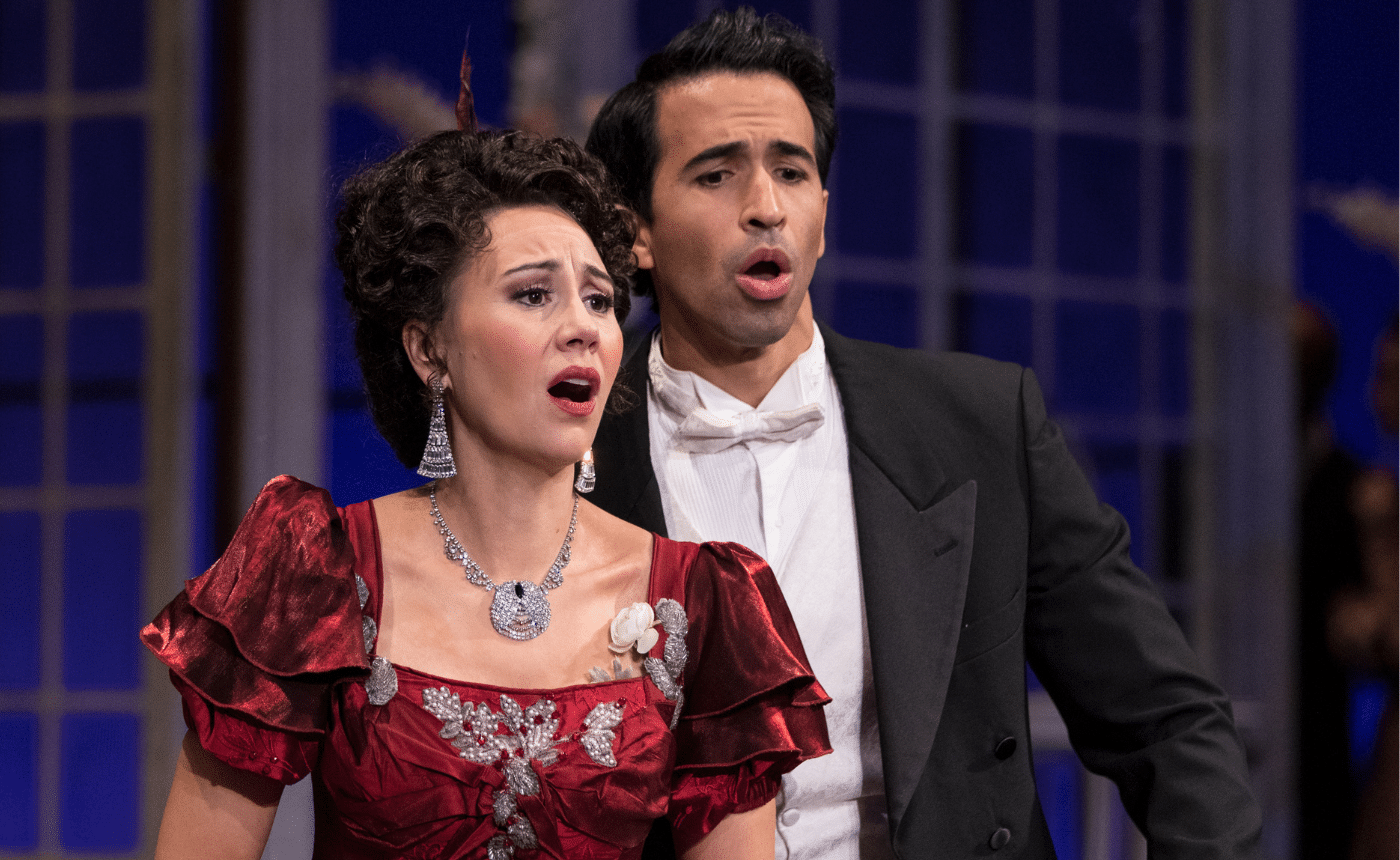
When Utah Opera announced an open call for dancers last year, applications—and questions—started pouring in. It seemed like dancing in La traviata was an opportunity people didn’t want to miss.
“It’s a different world,” reflected choreographer Daniel Charon. “They’re used to a lean infrastructure where dancers wear many hats. Opera, by contrast, lives within a deeply rooted tradition, often supported by a large staff.”
After 50 dancers applied, he chose six to perform in Verdi’s famous opera this spring. But, for Charon, choreographing this opera won’t be something new. He and director Garnett Bruce have collaborated with Utah Opera multiple times including La traviata in 2019—when Charon was still artistic director of Ririe-Woodbury Dance Company.
Integrating dance into opera adds new layers of physicality and meaning, he explained, enriching the experience for both performers and audiences.
“It tells us more about the characters,” Charon said. “It brings it all together.”
As Charon prepared to reconstruct his choreography, he studied the archival video.
He’d created roughly 30 minutes of choreography, scattered throughout the three-hour production. Though some sections may not surprise the audience—like the party scene dancing in Acts I and II—Charon and Bruce looked for storytelling moments in less obvious places.
The dancers appear in the preludes to Acts I and III “as a way to both visualize the beautiful music with movement and also to set up some of Violetta’s storyline,” the choreographer said. Later in the opera, the dancing becomes part of Violetta’s dreamworld.
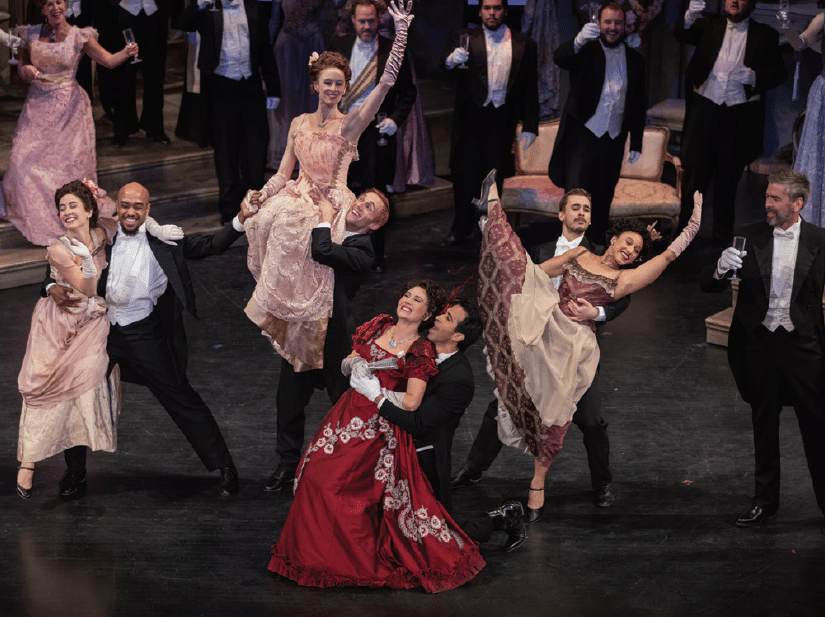
“In opera, there’s often so much opportunity musically for movement and moments that aren’t realized or taken advantage of—especially for more traditional operas like La traviata,” he said.
Leading up to rehearsals, he also studied his notes, which looked different than a traditional musical score, explained Charon, who is now retired from Ririe-Woodbury. His counts are not based on Verdi’s score and what a musician reads, but on what he hears in the music, allowing him to structure movement more easily.
With a new group of dancers performing, Charon knew his choreography was likely to evolve.
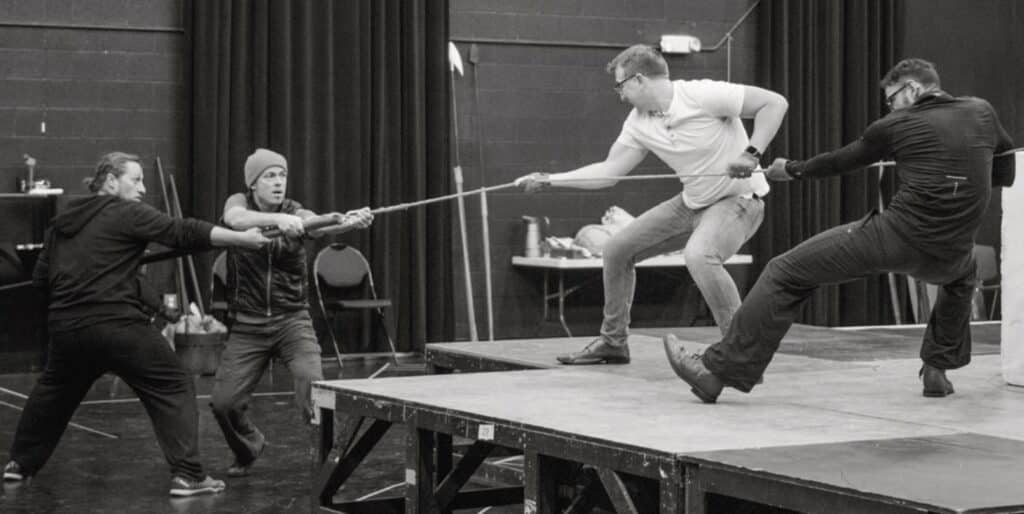
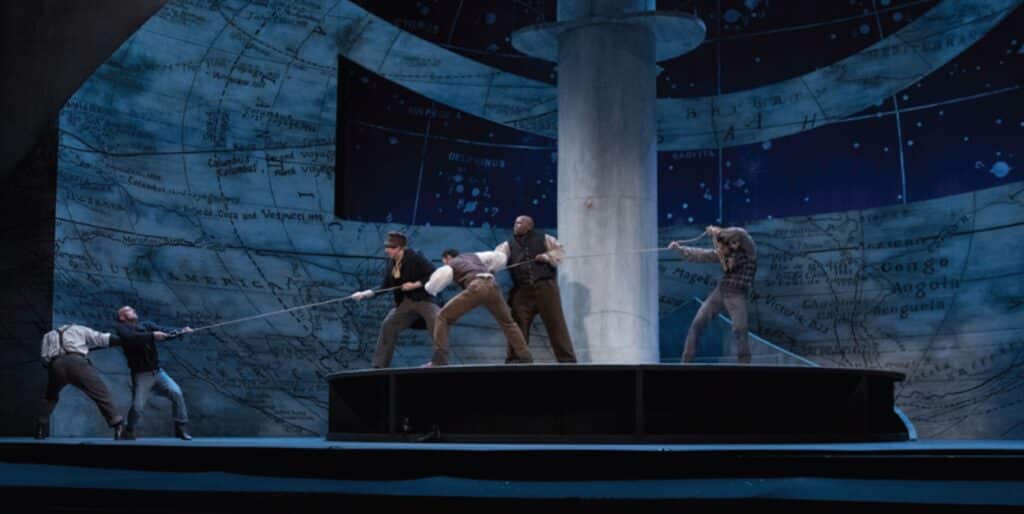
“If I find that things don’t work well on them or they have different strengths than a dancer in the original class, I’m happy to modify,” he said. ”If there are other opportunities in the score that we find have possibilities for some movement, we’ll explore that, too.”
Though some members of the audience might be surprised to see dancers on stage, partnering with local artists and arts organizations is a longstanding tradition at Utah Opera.
“One of the biggest joys of producing opera is the synergy that comes from collaborating with multiple disciplines and the artists who represent them,” said Christopher McBeth, Utah Opera Artistic Director. “The very word, ‘opera,’ derives from the concept—opera being the plural form of the Latin word for ‘work,’ opus—making productions and performances all the more meaningful and dynamic with every additional layer.”
When he and Charon first met, McBeth sensed his artistic contributions “would be a major boon to Utah Opera presentations.”
“He’s a true man of the theater,” McBeth said.
This kind of collaboration benefits everybody, Charon agreed.
“The more that arts organizations can collaborate rather than be competitive elevates the whole community,” the choreographer said. “It’s so important to work together, to brainstorm together. Hiring Ririe-Woodbury Dance Company [in 2019] gave us employment and exposure. This was great for our small nonprofit dance company.”
Though the company is not involved in this production, freelance dancers in Utah will benefit instead.
“That’s a great way of supporting the arts ecosystem in town,” Charon said.
But some of the dancing on stage won’t be by dancers. Charon works with singers in the opera, too. When he tells them he’s the choreographer, he always anticipates what they’ll say next: “I can’t dance.”
“Then they usually do a really great job,” the choreographer said, laughing.
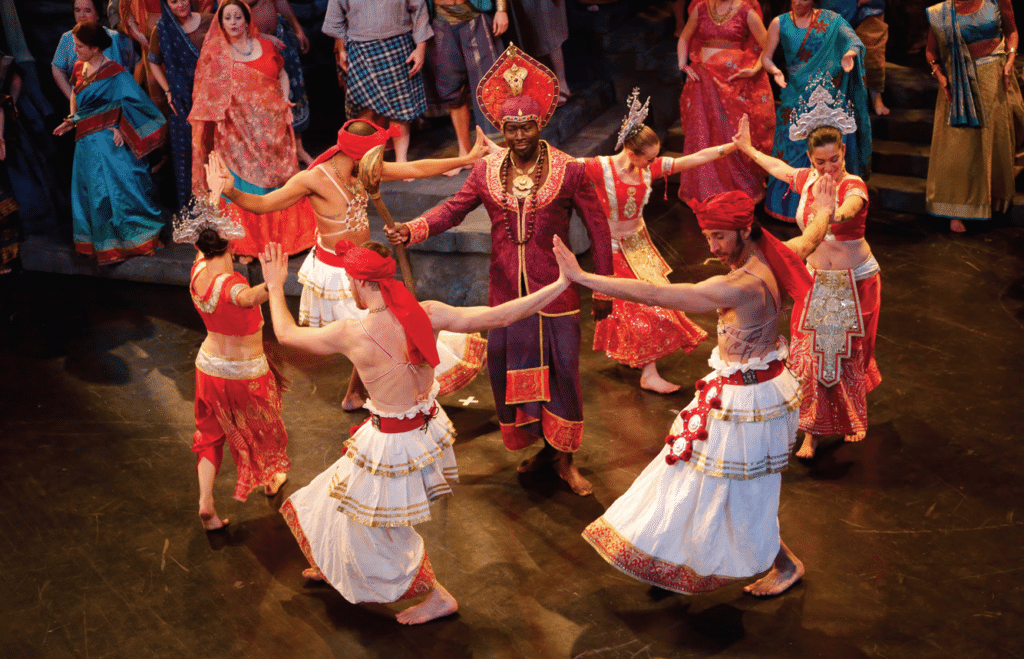
collaboration with Utah Opera.
Performing in an opera is a unique opportunity for these six dancers, said Charon, who danced in operas earlier in his career.
“We don’t often perform with live music,” he said. “The way the stage manager takes care of us—even the dressers and makeup and hair—it’s all very exciting.”
Though some opera composers set aside a section specifically for ballet, these dancers will get to perform a variety of dance styles.
“By bringing contemporary dancers to the work, there’s a human quality that can help with storytelling,” Charon said. “There’s a realistic sensibility to the way the dancers are moving.”
He hopes his dancers will make the beloved work resonate more deeply with audiences—as his choreography has so many times before.
“I hope to have him as a partner for many more projects,” McBeth said.